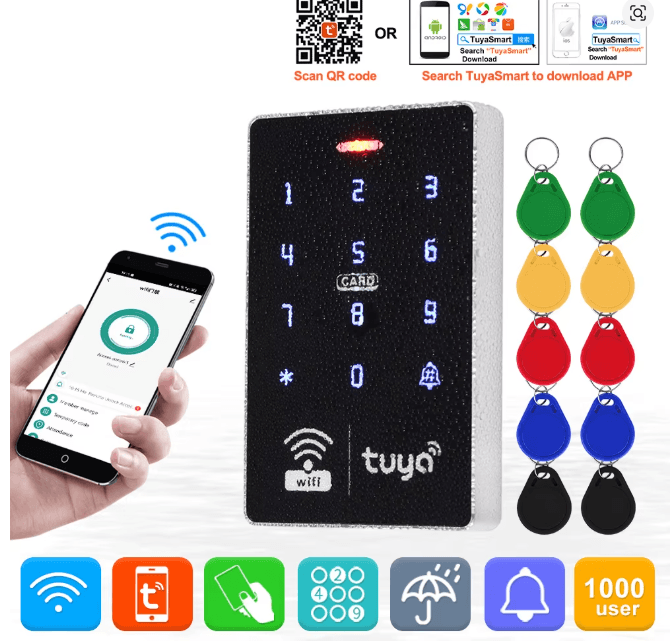
Available
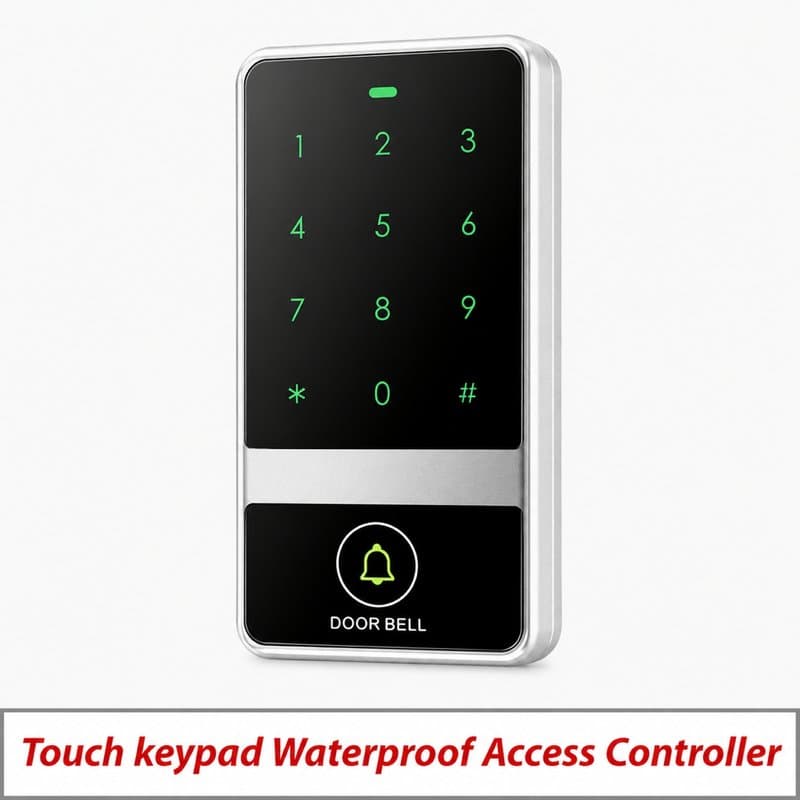
WiFi Tuya Door Access Control Keypad IP68 Waterproof RFID Keyboard Controller Reader Touch Opener APP Remote Unlock WG26/34
SKU WiFi-Tuya-Door-Access-Control-Keypad-IP68-Waterproof-RFID-Keyboard
Cookies keep this site secure and hold your basket; they also let us measure visits and see which adverts lead to orders. Privacy policy
Readers, controllers, keypads, fobs and cards for door entry on commercial sites — the parts installers fit on offices, blocks, gyms and warehouses, which we keep in UK stock for customers with a trade account.
All products
13 of 13 SKUs · dispatched the same day when ordered by 4pm
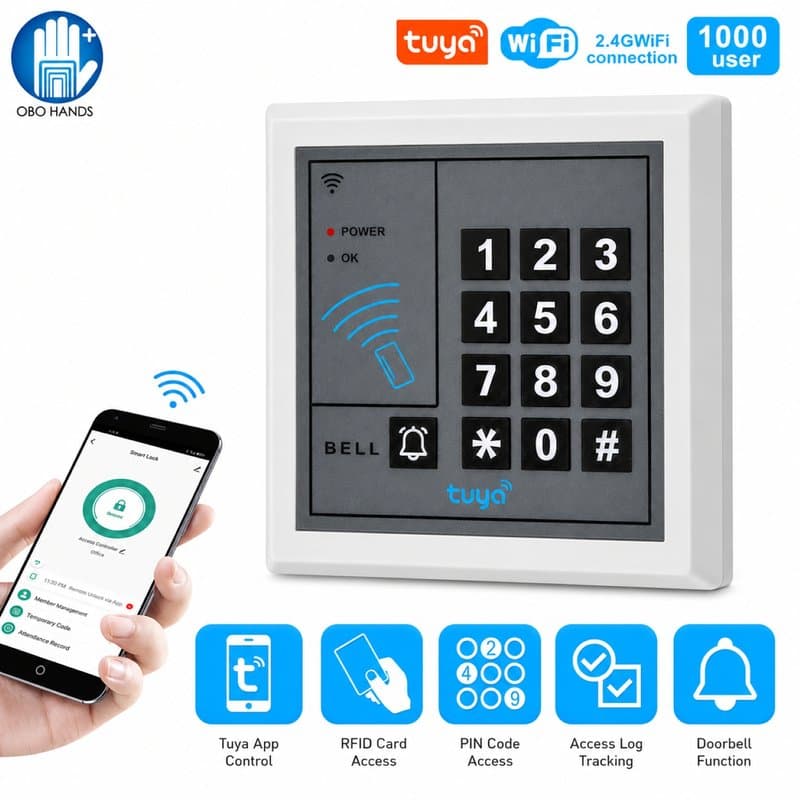
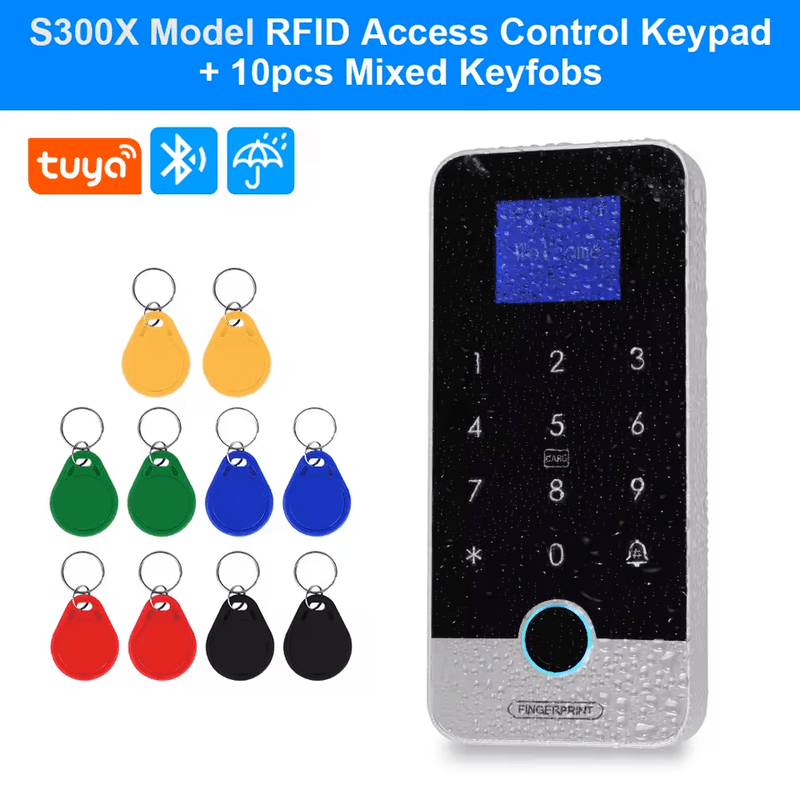
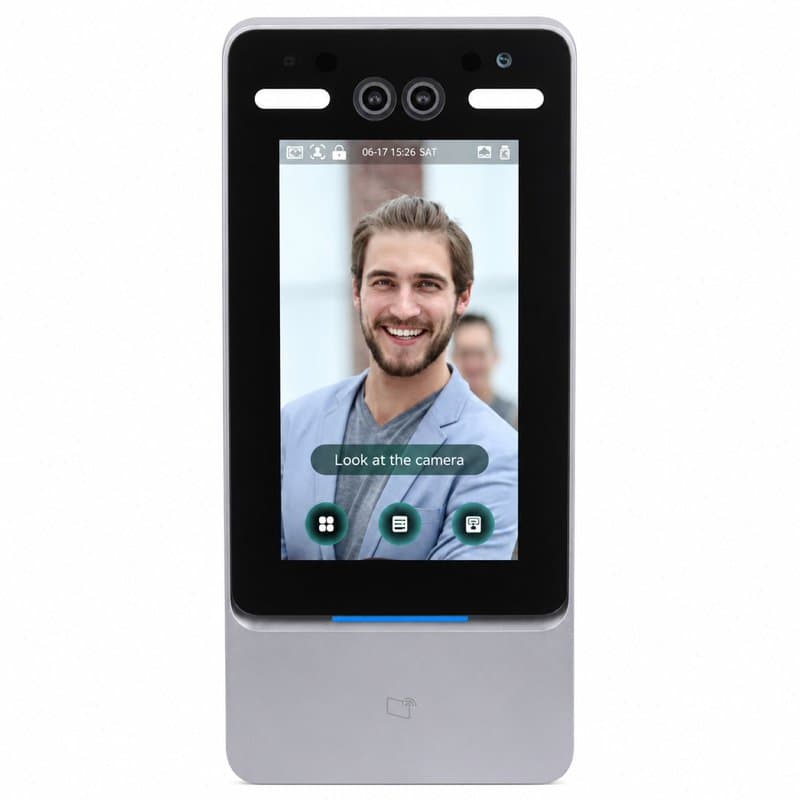
Every door needs four decisions: how people identify themselves (fob, card, code, phone or fingerprint), what holds the door (maglock, electric strike or motorised lock), how it releases in an emergency (break-glass, request-to-exit button, fail-safe or fail-secure), and where the decision is made (a standalone reader at the door, or a controller in a cupboard). Get the fail mode wrong and the door either traps people or unlocks in a power cut, which is the fault most retrofits are called back for.
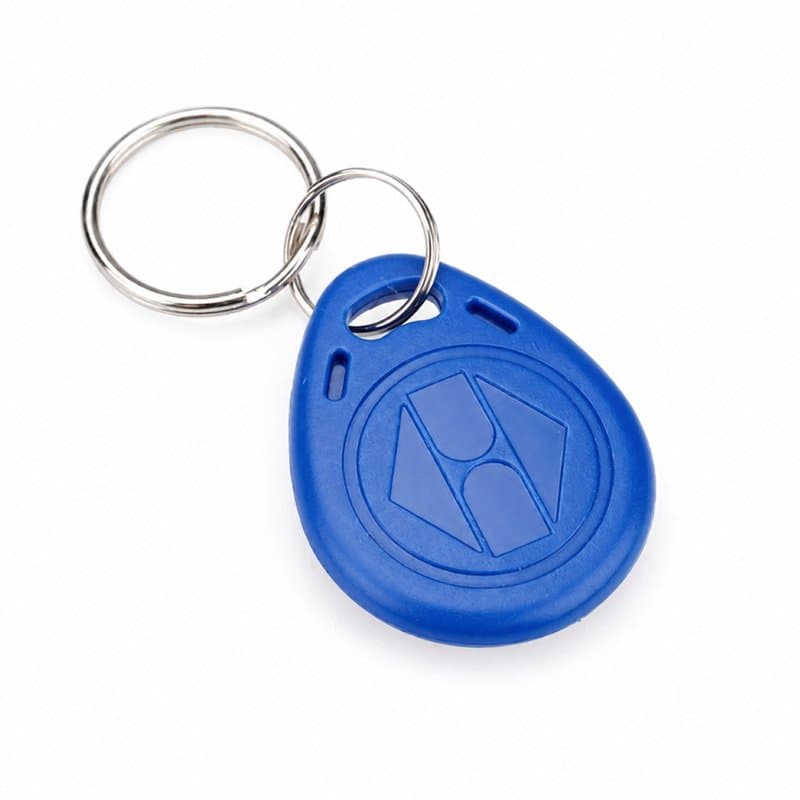
Credential frequency is the second trap. 125kHz (EM/Proximity) fobs are cheap and universal but trivially cloned; 13.56MHz (MIFARE/DESFire) costs a little more and is what to fit anywhere the credential controls money, stock or a residential block. The two are not interchangeable, so read the frequency on the existing reader before quoting fobs for an extension of an old system.
For anything past a handful of doors, put the decision in a controller rather than the reader: standalone readers keep their user list at the door, so removing a leaver means visiting every door. A controller keeps one list, logs who went where, and integrates with the intruder alarm and the CCTV recorder for event-linked footage — the reason most commercial specs land there.
125kHz (EM / Proximity) is the older, cheaper standard: it broadcasts a fixed number and can be copied with an inexpensive duplicator. 13.56MHz (MIFARE / DESFire) uses an encrypted exchange and is far harder to clone. Readers only accept the frequency they are built for, so match the fob to the reader — or replace both if you are upgrading a block for security reasons.
A magnetic lock is fail-safe by its nature, because it only holds while it is powered: remove the power and the door opens. That is correct on an escape route and required by fire regulations on most final exits. Electric strikes come in both variants, so a store room or a server room that must stay locked in a power cut takes a fail-secure strike, never a maglock.
As a rule, standalone readers are perfectly adequate for one or two doors whose users rarely change. Once there are several doors, regular staff turnover, or a need to show who opened a door and when, a controller becomes the economical choice: one user list, one place to remove a leaver, and an event log that can be handed to a client.
Yes. The usual method is a dry contact from the controller into an NVR alarm input, so that a door event bookmarks the footage. In practice that turns "we think it was Tuesday" into a clip found in seconds, and on a small commercial site it is the most useful integration of all.
Yes. Account pricing, trade support on specification, and stock held in the UK. Open a trade account and prices appear across the catalogue once your account is active.
© 2026 Euro CCTV · UK delivery