Product Description
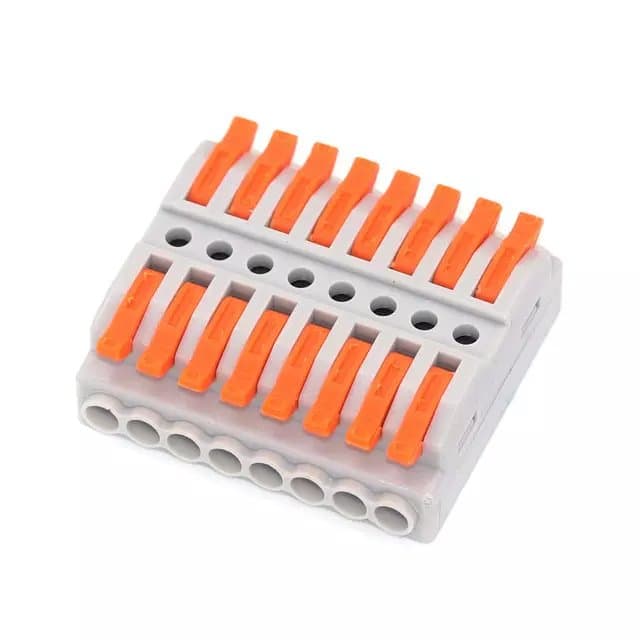
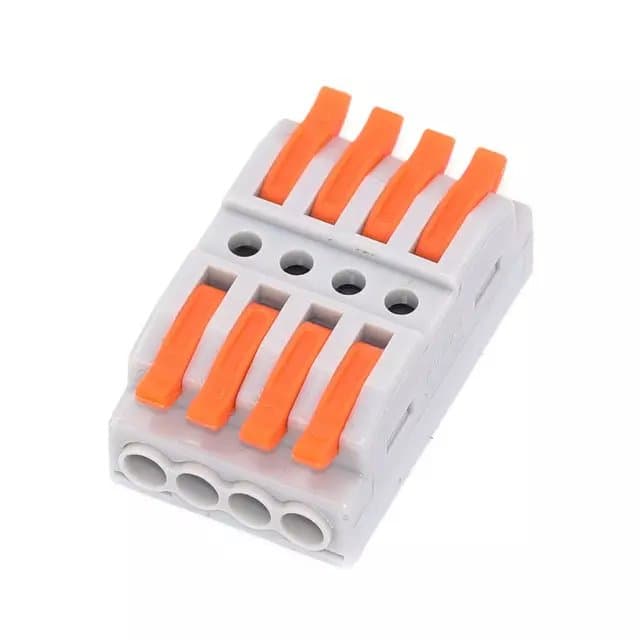
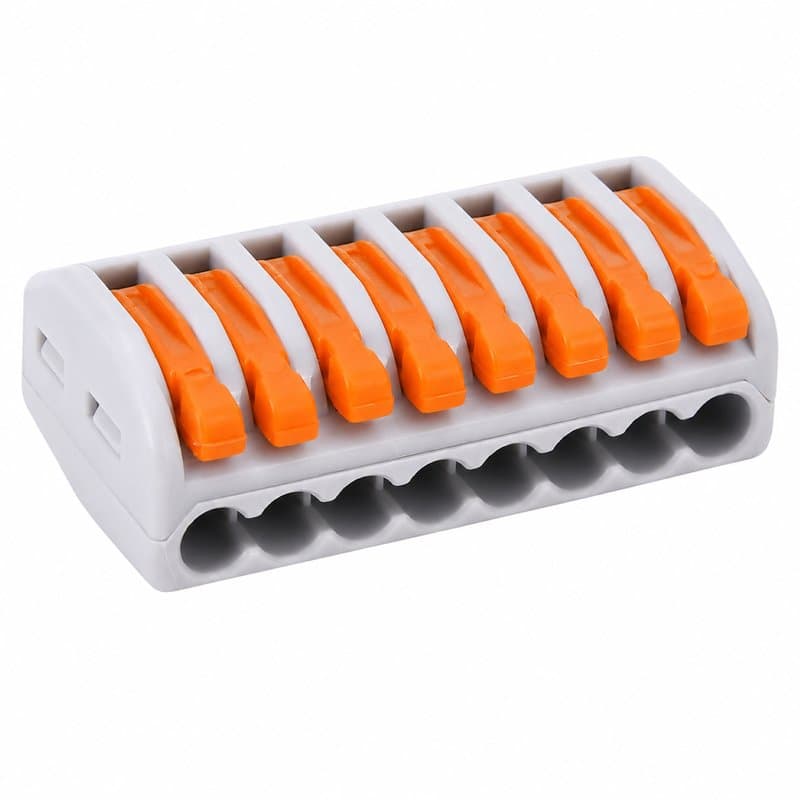
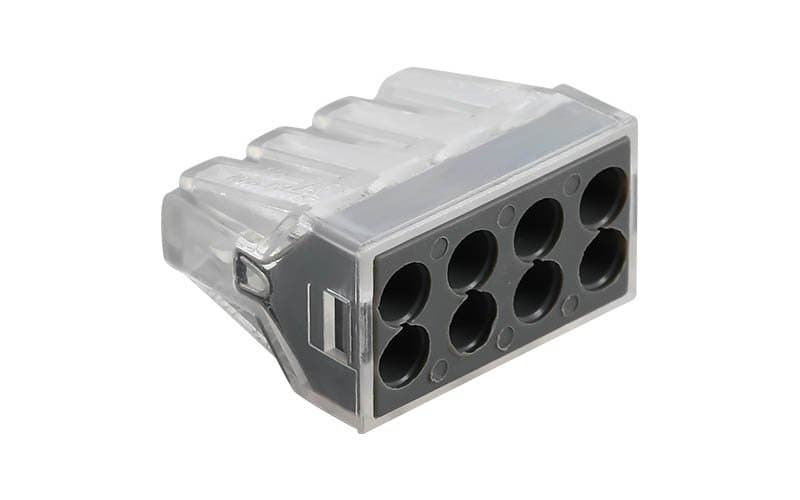
The PCT-108 is an 8-port push wire connector for splitting or joining low-voltage conductors in a single inline body. It suits CCTV power distribution, lighting circuits and control wiring where a fast, tool-free termination point is needed inside an enclosure.
Where it fits on a job
On a CCTV install, this connector is typically used inside a junction box or camera housing to split one incoming power feed to several camera drops, or to join conductors mid-run without a crimp tool. It's equally suited to lighting circuits and general low-voltage control wiring on retail, warehouse, office or residential block installs.
Key specs
- 8 independent ports per connector for distributing power or joining conductors
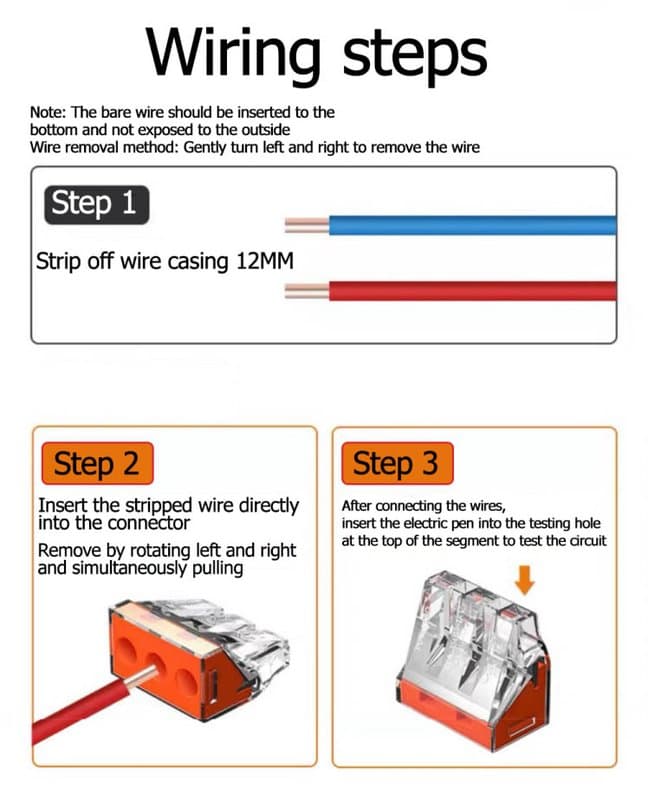
- Push-in spring clamp termination — conductors insert directly, no screwdriver or crimping tool required
- Accepts solid and stranded copper conductors
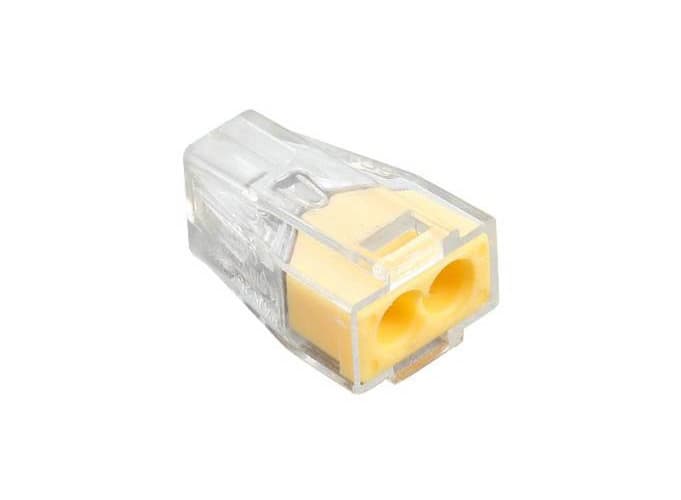
- See-through housing lets you check that the conductor is fully inserted.
- Compact inline design sized for junction boxes and CCTV enclosures
Selection notes for procurement
Specify by port count and termination type when matching against existing wiring schedules. Because it takes both solid and stranded copper, it works across mixed cable runs on a single job without needing separate connector types for each conductor form.
Suited to bulk stocking for engineers carrying out multiple CCTV or low-voltage installations, where a consistent inline connector reduces the number of termination methods on site.
Technical Specifications
Frequently Asked Questions
What conductor types does the PCT-108 accept?
It accepts both solid and stranded copper conductors, as used in typical CCTV power cable, alarm wiring and low-voltage control systems.
Do I need tools to terminate conductors?
No — the PCT-108 uses push-in spring clamp termination, so conductors insert directly without a screwdriver or crimping tool.
How many conductors can one connector handle?
The PCT-108 has 8 independent ports, allowing power to be distributed or conductors joined within a single connector body.
Can I check the conductor is seated correctly?
Yes — the housing is transparent, so insertion can be visually confirmed before closing up the enclosure.