Product Description
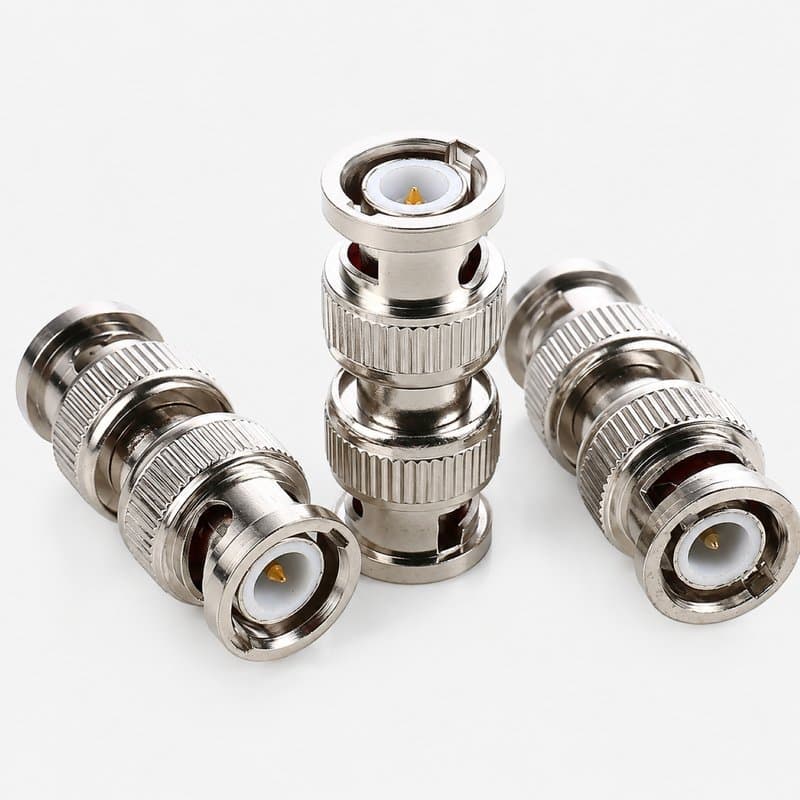
A BNC female-to-female coupler joins two BNC male-terminated coaxial cables in-line, letting installers extend a run without re-terminating a connector or pulling a fresh cable.
Where it's used
On a retail or warehouse install, this is the fix when a camera lead falls short of the DVR by a metre or two, or when a structured cabling run needs a joint at a junction box rather than a full re-cable. It's equally at home in a comms rack, tidying up patched coax runs on multi-camera office or residential-block systems.
Compatibility
- Fits RG59 and RG6 coaxial cable, the two types used across most CCTV runs.
- Supports analogue, HD-TVI, AHD and CVI video formats, so it works across mixed-standard DVR estates rather than locking installers to one camera system.
- Suitable for connecting CCTV cameras, DVRs and general monitoring equipment.
Build
The body is precision metal, which keeps electrical contact stable at the joint — a loose or corroded coupler is a common cause of signal dropout or a noisy picture on long coax runs. The compact inline shape sits flush inside a junction box or cable duct without adding bulk, which matters when space in a first-fix enclosure is already tight.
Keep a few of these in a van stock for maintenance callouts — they save a re-terminate when a cable's simply short, not faulty.
Specifications
- Brand
- Unbranded
- Colour
- Silver
Frequently Asked Questions
Which cable types is this coupler compatible with?
Designed to suit RG59 and RG6 coaxial cable, the two most widely used types in CCTV installations.
Will it work with HD-TVI or AHD cameras, or only analogue?
It supports analogue CCTV as well as HD-TVI, AHD and CVI signal formats, so it isn't limited to one camera system.
What's it typically used for on site?
Mainly extending a coaxial run — for example joining a camera cable to a DVR lead — without re-terminating a new connector.
Does the metal body affect signal quality?
The precision metal construction is built to maintain stable electrical contact, which helps preserve signal integrity across the joint.