Product Description
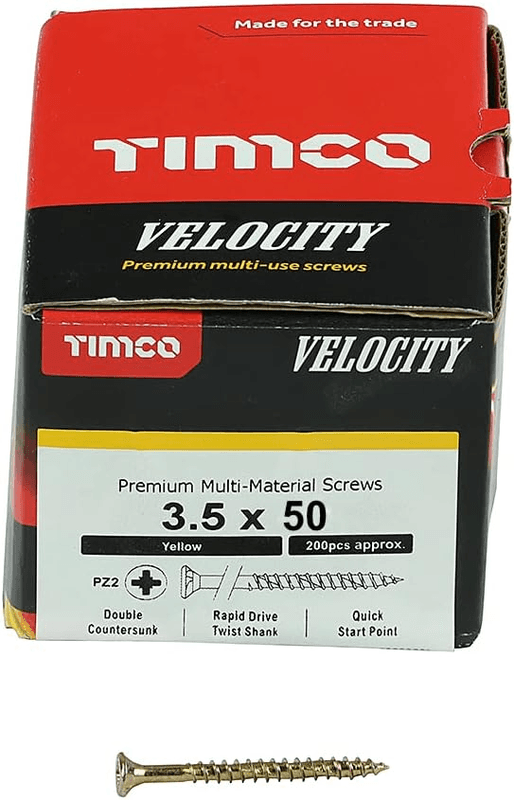
This is an odd one for a CCTV specialist to stock, but it's here because every camera install eventually needs a wood screw. The TIMCO Velocity 3.5 × 50mm countersunk Pozi screw is what you reach for when a bracket, back box or timber batten needs fixing before the cabling and lens go on.
What it's for
- Size: 3.5mm diameter × 50mm length — enough thread engagement for medium-duty timber and chipboard fixing.
- Head: countersunk, so it sits flush once driven home — useful where a camera mount or junction box plate needs a clean surface.
- Drive: Pozi recess, giving better bit engagement and less cam-out than a plain slotted head when driving into hardwood or engineered board.
- Finish: yellow zinc plated steel, for corrosion resistance on internal fixings.
Where it fits on an install
On a typical CCTV job these turn up fixing wooden mounting blocks, soffit boards, or timber-framed enclosures rather than the masonry fixings used for brick or block walls — pair with an appropriate wall plug where the substrate isn't timber. Keep a stock of these alongside your camera brackets and cable clips; they're general-purpose enough for joinery, furniture assembly and site carpentry too, not just camera mounting.
Suited to internal building applications given the zinc finish is described for corrosion resistance rather than full outdoor exposure.
Specifications
- Brand
- TIMCO
- Dimensions
- 3.5 × 50 mm
- Material
- Zinc
- Colour
- Yellow
Technical Specifications
Frequently Asked Questions
What size is this TIMCO Velocity screw?
It's 3.5mm in diameter and 50mm in length, with a countersunk Pozi head.
Is this screw suitable for outdoor use?
The yellow zinc plated finish is described as corrosion resistant for internal building applications, so it's not specified as an outdoor-rated fixing.
What materials can it be used with?
It's designed for timber, chipboard and general construction materials such as carpentry and joinery work.
Why choose a Pozi drive over a slotted screw?
The Pozi recess gives improved driver engagement, reducing cam-out and allowing better torque transfer during installation.